
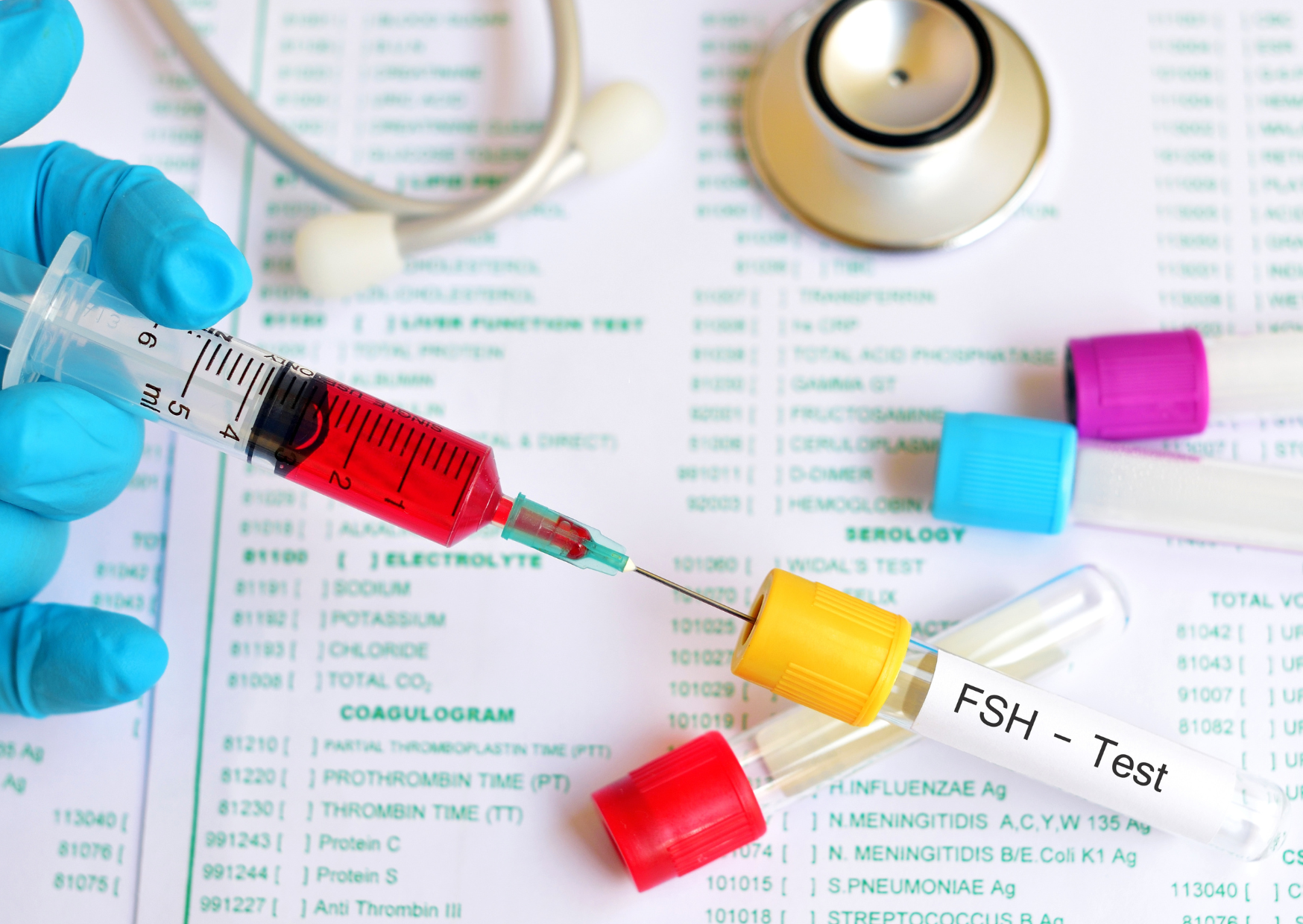
Follicle stimulating hormone test
Perimenopause is very confusing. It’s often misunderstood.
Now that may not surprise you, but this might… perimenopause is not a one-way street. A woman can be perimenopausal one day, and then, days, weeks or months later, go back to being pre-menopausal, even when she’s not on HRT. So, what does this mean and why is it important?
Perimenopause is a normal hormonal stage, just like puberty, and it usually happens around the age of 48. Symptoms can be complex and vary hugely from one woman to the next. So too does the duration of this hormonal life stage which is, on average, three to four years but can last up to a decade or as little as a few months. What is certain is that no two women’s experiences of perimenopause will be the same.
What happens to hormones in perimenopause?
Perimenopause is when there are low levels of progesterone and fluctuating levels of oestrogen in the body. And when levels of follicle stimulating hormone (FSH) start to rise. A woman’s FSH level can be a useful tool to help work out whether she is perimenopausal or not because, when the brain detects low oestrogen, it sends a message to the pituitary gland to release more follicle stimulating hormone. This triggers the ovaries to produce more oestrogen but, of course, it’s not that simple.
Does a blood test show you’re perimenopausal?
We know that GPs and many in the medical profession are reluctant to do blood tests for perimenopausal symptoms. Patients are often told that these tests aren’t needed because symptoms alone are enough of a diagnosis. They can also be unreliable, if, for example, a woman is on hormonal contraception. A single test can also give inaccurate results.
Take Arya. A blood test, at the age of 52, showed a high level of FSH and low oestrogen and so, having several perimenopausal symptoms, she started hormone replacement therapy. A few months later, she developed breast tenderness and started to have intermittent periods. A blood test at this point revealed a very low FSH level which, combined with her symptoms, indicated that she no longer needed the oestrogen component of her HRT. Arya had been heading towards menopause but, as her blood test and symptoms showed, she was now making oestrogen again.
That said, some GPs, when asked, will test FSH levels because, taken in context, they can be a useful guide to where a woman is in her reproductive life cycle. They will generally do this for women aged 40-45 years with menopausal symptoms and a change in their menstrual cycle and women under 40 if they suspect premature menopause.
I’m not having periods; do I still need contraception?
Even if a woman isn’t having regular periods, or any periods at all, she could still be ovulating. It’s something many women question and an FSH level test can provide answers. The advice, even when the level of follicle stimulating hormone is consistently high and in line with menopause levels, is to continue to use contraception for another year, or until twelve months after your last period, or until you reach the age of 55.
Of course, many perimenopausal women, like Johanna, are on hormonal contraception. She’s 45 and has had the Mirena coil for two years and because of that doesn’t know whether, without it, she would still be having periods. The advice in Johanna’s case is to continue with the coil for another year and then remove it.
What you need to know…
· Levels of follicle stimulating hormone (FSH) start to rise in perimenopause.
· They can be a useful tool to work out whether someone is perimenopausal or not.
· Many GPs (when asked) will perform this blood test.
· The results of an FSH test alone are not enough and need to be taken in context.
· A high FSH level doesn’t alone mean a woman should stop contraception.
Follicle stimulating hormone levels are just one piece of the complex puzzle that is perimenopause. Tests are useful, but not critical and any results need to be used alongside the symptoms a woman is experiencing and her menstrual history.